




IC Cards in Japan Explained: Suica Recharge Methods for Travelers
Japan’s transportation network is famously efficient, but efficiency only works in your favor when you understand how to use it. For travelers arriving from abroad, the speed and scale of Japan’s rail system can feel overwhelming at first—especially during the first rush-hour encounter with ticket gates and fare charts.
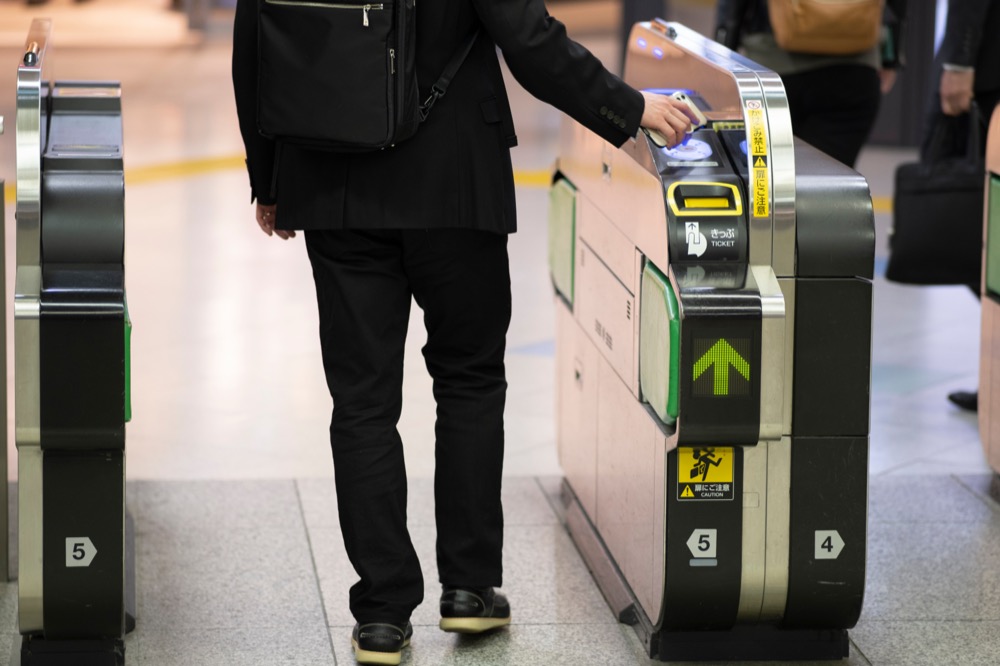
Japan is a rail-centric country, and trains, subways, and buses are the backbone of daily life in cities like Tokyo, Osaka, and Kyoto. IC cards, then, are the key that unlocks the transportation system. Instead of calculating fares for every ride or lining up at ticket machines, travelers can simply tap in and out, transferring seamlessly between JR lines, private railways, subways, and buses. One card covers nearly every situation, from a short metro ride to a cross-city commute.
Without an IC card, common frustrations add up quickly: ticket machines can be confusing even with English menus, exact fares are rarely obvious, and cash-only requirements catch many travelers off guard. For such reasons, we hope to clarify how you can use an IC card in Japan so that your trip is as smooth as the country’s train system.
Getting Around Japan with an IC Card
An IC card is more than a transit pass in Japan; it's a compact, prepaid wallet that makes daily travel effortless.
Major IC Cards in Japan and How They Work Together
Three names appear most often in guidebooks and at airport counters: Suica, PASMO, and ICOCA. JR East issues Suica, which is widely used in the Greater Tokyo area. PASMO is operated by private railway and subway companies in Tokyo. JR West operates ICOCA and is common in Osaka, Kyoto, and the broader Kansai region. Any of these cards will serve a traveler well.
Beyond those three, Japan has several regional IC cards: Kitaca (Hokkaido), Toica (Nagoya area), Manaca (Nagoya private lines), Sugoca (JR Kyushu), Nimoca (primarily in Fukuoka and parts of Kyushu), Hayakaken (Fukuoka City Subway), and PiTaPa in Kansai. Different railway operators issue their own cards, yet nearly all operate on a shared nationwide infrastructure.
Interoperability is what makes the IC card system remarkably traveler-friendly: a Suica purchased in Tokyo works on subways in Osaka, buses in Kyoto, and even certain transit networks in Fukuoka. Gates recognize the card automatically and deduct the correct fare in yen based on the distance traveled. No need to purchase a new card in every city, or to study complex fare tables before boarding.
IC Cards Are Not Just for Trains
Although trains are the primary use, IC cards extend well beyond rail gates. City buses accept IC payments with a simple tap when boarding or exiting, depending on the route. Vending machines in stations and on platforms often display the IC logo, allowing quick purchases without coins. Coin lockers at major stations often accept IC cards, sparing travelers the hassle of scrambling for exact change.
Convenience stores such as 7-Eleven, Lawson, and FamilyMart also accept IC cards for small purchases. A bottled drink costing 160 yen or a quick breakfast on the way to the station can be paid for instantly—the card balance updates automatically after each transaction.
Integration even extends to the Bullet Train Shinkansen in certain regions: travelers can link reserved bullet train tickets to a compatible IC card and enter through special gates without printing paper tickets. Seat details, departure platforms, and compatibility vary by operator, so checking official information online before travel is wise. Note that reliable internet access makes confirming eligibility, managing reservations, and reviewing seat assignments far easier while on the move.
How to Top Up Your IC Card in Japan
Keeping your IC card funded is essential for a smooth trip, especially during busy commuting hours when ticket gates move quickly, and hesitation can cause delays. Fortunately, Japan offers several reliable ways to recharge, whether you carry cash, prefer digital payments, or rely on mobile apps.
Topping Up at Train Stations (Ticket Machines)
The most common method is recharging at ticket machines inside JR and subway stations. Nearly all major stations in Tokyo, Osaka, Kyoto, and other urban areas provide machines with English-language menus.
You’ll simply need to insert the IC card into the designated slot, select “チャージ” or “Charge” on the touchscreen, choose the amount (commonly 1,000, 2,000, 3,000, 5,000, or 10,000 yen), and insert cash. Next, the updated balance appears on the screen before the card is returned.
Not every machine supports IC card charging: older ticket machines may be limited to paper tickets only, especially in smaller stations or rural areas. You’ll want to look for signage displaying the IC logo near the card slot.
Charging Your IC Card at Convenience Stores
You might not know it, but major convenience store chains offer IC card top-up services at the register. Simply hand the card to the cashier and say, “チャージお願いします” (Chaaji onegaishimasu), which means “Please recharge.”
Payment is made in cash; credit cards are generally not accepted for physical IC card charging at store counters, an important detail for travelers who prefer cashless transactions. The cashier will confirm the amount, process the recharge, and return the card with a printed receipt showing the new balance.
Again, note that some smaller or independently operated convenience stores may not provide IC top-up services, even if they accept IC payments for purchases.
Using the Seven Bank ATM
Seven Bank ATMs, commonly found inside 7-Eleven stores, also allow IC card charging. Select the English language option on the ATM screen, choose the IC card recharge function, insert the card when prompted, and insert cash. The machine displays the updated balance before returning the card.
Seven Bank ATMs are widely available across Japan and operate 24 hours a day in most locations, making them a dependable backup option outside regular station hours.
App, Apple Pay & Mobile IC Card Top-Ups (Wi-Fi Required)
Mobile IC cards—such as Mobile Suica, PASMO, and ICOCA on Apple Pay—allow users to recharge directly through a smartphone. After adding a compatible credit card to your Apple Wallet, you can add funds digitally in increments of 1,000 yen.
However, an active internet connection is required for mobile charging. Transactions must communicate with the issuer’s servers to authorize payment, update the balance, and confirm the recharge. Balance checks and transaction histories also rely on connectivity.
In such a scenario, using public Wi-Fi networks is not ideal—they are inconsistent, slow, and generally not safe. A private connection is recommended instead. Portable Wi-Fi devices provide flexibility in transit, whether waiting on a platform in Tokyo or transferring trains in Kyoto, ensuring that a low IC balance never disrupts the day’s plans.
Travel Tips: How Much to Charge & Troubleshooting
Even with a reliable IC card in hand, small miscalculations can interrupt an otherwise smooth day. Knowing how much to load will help you keep your itinerary in Japan predictable and stress-free.
How Much Should You Top Up?
A practical rule of thumb is 1,000 yen per day for urban sightseeing. In Tokyo, a single subway or JR ride typically ranges between 170 and 300 yen, depending on the distance. Three to five rides in one day often total 800 to 1,200 yen. Adding a short bus trip or a convenience store purchase may push the total slightly higher.
Regional cities such as Kyoto, Fukuoka, or Sapporo often involve fewer train transfers, so that daily transportation costs may stay closer to 600-900 yen. Travelers planning longer suburban trips should budget more accordingly.
The maximum balance for most IC cards, including Suica, PASMO, and ICOCA, is 20,000 yen. Loading the full amount is rarely necessary for short-term visitors. Refund policies can vary by card type and region, and certain tourist versions do not allow balance refunds. Hence, maintaining a moderate balance reduces the risk of leftover funds at departure.
Common IC Card Problems Tourists Face
Not every ticket machine supports IC card charging, and not every convenience store will accept charging requests. Mobile IC card users may encounter another challenge: an app that refuses to load or display an updated balance. Without internet access, digital top-ups cannot be processed, and balance confirmations cannot sync.
Reliable connectivity prevents most of these situations: route apps show nearby stations, store locators identify compatible convenience stores, and account dashboards confirm whether a charge has completed successfully.
Why Constant Connectivity Matters
Stable, private internet access supports far more than social media. Navigation, translation, ticket management, and IC balance updates all rely on consistent connectivity.
Free public Wi-Fi is widely available in theory, but often requires repeated registrations and offers inconsistent speeds. Meanwhile, international roaming can be convenient yet expensive. eSIM and physical SIM cards provide flexibility for solo travelers, though installation and compatibility require preparation.
Pocket Wi-Fi offers another solution, particularly for families or groups. Although it implies carrying and charging an additional device, a pocket Wi-Fi unit can connect multiple smartphones simultaneously, maintaining secure access throughout the day.
Conclusion
An IC card is one of the simplest tools for navigating Japan efficiently, yet it works best with a bit of planning. A quick balance check each morning and a timely recharge before evening rush hour can prevent unnecessary stress at crowded ticket gates.
Checking the balance regularly (either at station gates, ticket machines, convenience stores, or through a mobile app), recharging outside peak commuter hours (typically before 8:00 a.m. or after 7:00 p.m. in major cities), and keeping some cash on hand should prevent most IC card issues.
Preparation also extends to connectivity. Continuous internet access supports everything from mobile Suica top-ups to bullet train reservations and route adjustments across regions. An IC card keeps transportation seamless; dependable connectivity ensures every tap at the gate works exactly as expected.