




Japan Train App Guide for Tourists: How to Use Trains in Japan with Useful Apps

Japan’s train system is often seen as complex, especially for first-time travelers. With multiple operators, dozens of lines, and massive stations, navigating trains in Japan can feel overwhelming before you even arrive.
In reality, train travel in Japan becomes straightforward once you rely on the right tools. You do not need to read Japanese or memorize routes. With a train app like Google Maps, a prepaid IC card such as Suica, and stable Wi-Fi, you can move through even the busiest stations with confidence.
Real-time navigation, instant route updates, and seamless payments all depend on connectivity. Without reliable internet access, delays, platform changes, and route adjustments can quickly become difficult to manage. Having a solution ready before arrival, such as reserving a pocket Wi-Fi device, ensures you can start navigating the moment you land.
Japan Train App Guide: Why Japan’s Train System is Easier Than It Looks
Japan’s train network can appear overwhelming at first due to the number of lines, operators, and stations. However, the system is highly structured and designed for efficiency. Once you understand how to access real-time information and use the right tools, navigating trains becomes straightforward and predictable.
The System Looks Complex But is Highly Organized
Multiple companies, including JR lines, subways, and private railways, operate train lines. In cities like Tokyo, dozens of lines intersect, creating a dense network.
Despite the complexity, signage is clear, stations are well-managed, and trains run on precise schedules. Each platform, route, and direction is consistently labeled, allowing you to follow instructions step by step without prior experience.
Most Problems Come from Lack of Real-Time Information
Most navigation issues occur when travelers rely on static information such as screenshots or printed maps. Train schedules can change due to delays, platform switches, or service disruptions.
Without real-time updates, you may board the wrong train, miss a transfer, or wait on the incorrect platform. Access to live data ensures that you can respond immediately to any changes in the system.
You Do Not Need to Read Japanese to Navigate
Station names, train lines, and major signs are displayed in English, along with clear numbering systems. Navigation apps provide step-by-step instructions in English, including transfer points and travel times. Using a train app removes the need to read Japanese, as directions are presented visually and in your preferred language.
The 3 Essentials: Google Maps, Suica, and Wi-Fi
Efficient train travel in Japan depends on three key tools: Google Maps for navigation, Suica for payments, and stable Wi-Fi for real-time access.
Google Maps provides route guidance, Suica allows seamless entry and payment, and Wi-Fi ensures that all information stays up to date. With these three elements, you can navigate even the most complex stations with confidence.
Japan Train App Guide: How Google Maps Powers Train Travel in Japan
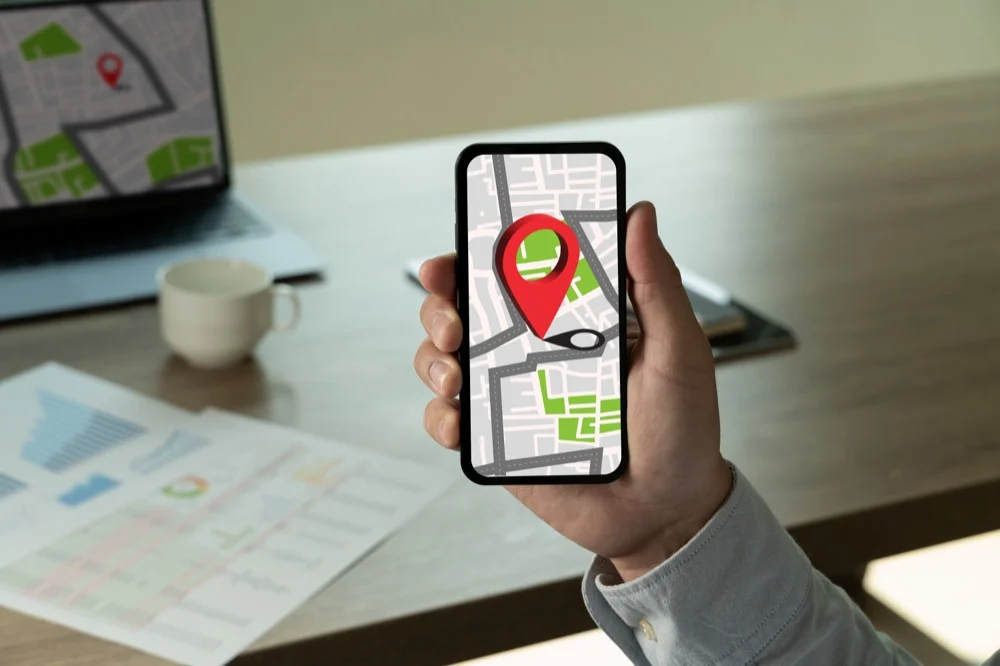
A reliable train app is essential for navigating Japan’s transportation system efficiently. Google Maps functions as a complete navigation tool, providing real-time updates, route comparisons, and step-by-step guidance across train networks.
Real-Time Timetables, Delays, and Platform Information
Google Maps provides live train schedules, including departure times, delays, and platform numbers. Information updates continuously, allowing you to adjust plans when disruptions occur. In major stations, platform changes can happen quickly, so real-time access ensures that you are always following the correct route.
Route Search: Enter Destination and Compare Options Instantly
Entering a departure point and destination generates multiple route options, including travel time, number of transfers, and total cost. You can choose between faster routes, fewer transfers, or lower fares depending on your priorities. Route comparison helps you make informed decisions before starting your journey.
Step-by-Step Navigation: Transfers, Platforms, and Exit Guidance
Navigation includes detailed instructions for each step of your journey, from boarding the correct train to transferring lines and exiting the station. Large stations often have multiple exits, and choosing the correct one can save significant time. Navigation apps guide you through these details with precision.
Train Car Positioning for Faster Transfers
Google Maps often indicates which train car to board for the most efficient transfer. Positioning yourself in the correct car reduces walking time between platforms, especially in large stations. In busy hubs, small time savings can make the difference between catching a connection and missing it.
How Travelers Actually Use Train Apps in Japan
Even with highly accurate train apps, there are small behaviors that naturally emerge when navigating Japan’s rail system.
One common habit is repeatedly checking platform numbers. In major stations, it’s normal to see travelers glance at their phone, look up at station signs, then check their phone again, sometimes multiple times, before boarding. Apps like Google Maps and NAVITIME are extremely reliable, but the sheer scale and complexity of large stations create a natural urge to confirm details multiple times. It’s less about distrust and more about adapting to the environment and making sure everything lines up correctly.
Another detail that often surprises first-time visitors is how much thought goes into choosing the right train car. Some apps guide the best way to transfer, exits, or escalators, and in large stations across Tokyo, this can save several minutes of walking. What might seem like a small detail quickly becomes part of a more efficient travel rhythm. Over time, many travelers begin to realize that where you stand on the platform isn’t random, as it’s a simple optimization that makes navigating complex stations noticeably smoother.
The Wi-Fi Limitation: Offline Mode Cannot Show Live Data
Offline maps do not provide real-time updates such as delays, platform changes, or alternative routes. Underground train lines frequently have limited signal, and relying on outdated information can lead to mistakes. Continuous Wi-Fi access ensures that navigation remains accurate, even in complex or rapidly changing situations.
Japan Train App Guide: Step-by-Step How to Use Trains with an App
Using a train app simplifies the entire travel process. Following a structured approach allows you to move from departure to arrival without confusion, even in unfamiliar environments.
Step 1: Enter Departure and Destination
Open Google Maps and input your starting location and destination. The app automatically detects nearby stations and suggests relevant routes.
Accurate input ensures that you receive precise directions tailored to your location.
Step 2: Choose the Best Route Based on Time and Transfers
Review the suggested routes and compare travel time, number of transfers, and total cost. Selecting the most suitable option depends on your schedule and comfort level.
Routes with fewer transfers are often easier for first-time travelers.
Step 3: Follow Navigation and Transfer Alerts
Start navigation and follow each instruction in sequence. The app provides alerts for when to board, when to transfer, and which platform to use.
Real-time notifications help you stay on track throughout the journey.
Step 4: Adjust Instantly When Delays Occur
Train delays and service changes can happen, especially during peak hours. Navigation apps update automatically and suggest alternative routes when needed.
Being able to adjust immediately prevents unnecessary waiting and confusion.
Why Real-Time Access Changes Everything
Travel by train in Japan relies on timing and accuracy. Real-time access allows you to respond to changes, find the correct platform, and complete transfers efficiently. In areas with limited connectivity, such as underground sections or regions near Mount Fuji, maintaining a stable connection ensures that navigation tools continue to function without interruption.
Japan Train App Guide: Suica and IC Cards Explained for Tourists

IC cards simplify train travel across Japan by allowing you to enter stations and pay for transportation without purchasing individual tickets. Instead of calculating fares each time, you simply tap your card at the ticket gate, and the system automatically deducts the correct amount.
Understanding how topping up and using IC cards work helps you move through stations faster and avoid confusion when transferring between train lines.
What is Suica and How It Works Across Japan
Suica is a rechargeable IC card issued by East Japan Railway Company. The card functions as a prepaid balance system, allowing you to tap in and out at train stations. Suica can be used on most trains, subways, and buses across major regions such as Tokyo, Osaka, and Kyoto. The card is also widely accepted at convenience stores, vending machines, and some restaurants.
Using an IC card eliminates the need to purchase individual train tickets for each trip.
Physical Card vs Mobile Suica: Key Differences
Choosing between a physical Suica card and a mobile version can impact how smoothly you travel in Japan. Here’s a quick comparison to help you decide which option fits your needs:
| Feature | Physical Suica Card | Mobile Suica |
| How to Get | Purchased at ticket machines or airport counters | Set up on a compatible smartphone |
| Usage | Tap card at gates and payment terminals | Tap your smartphone instead of a card |
| Convenience | Simple and reliable, no device needed | No need to carry a separate card |
| Setup Requirements | None beyond purchase and charging | Requires a compatible device and initial setup |
| Connectivity | Works offline at all times | The Internet may be needed for setup and some functions |
| Charging Methods | Cash or card at machines, kiosks, and convenience stores | Linked payment methods or app-based charging |
| Balance Checks | Ticket gates, machines | Mobile wallet app or gates |
| Everyday Payments | Accepted at many shops and vending machines | Same usage, integrated with phone payments |
Welcome Suica for Short-Term Visitors
Welcome Suica is designed specifically for short-term travelers visiting Japan. Unlike the standard Suica card, the tourist version does not require a deposit.
Welcome Suica is valid for 28 days and can be purchased at major airports, including Narita International Airport and Haneda Airport.
The card functions the same way as a regular IC card during its validity period.
Why Mobile Suica Requires Internet Access
Mobile Suica relies on internet connectivity for certain functions, such as adding funds, checking account information, or setting up the card initially.
When traveling underground or in areas with a weak signal, these features may become temporarily unavailable. Maintaining Wi-Fi access ensures that balance updates and payment features remain available when needed.
Japan Train App Guide: Understanding Train Types in Japan
Japan’s railway system includes several train types that operate on the same lines but stop at different stations. Understanding the differences helps you choose the correct train and avoid delays during your journey.
Most train apps clearly identify the train type for each route, making it easier to select the appropriate service.
Local, Rapid, Express, Limited Express, and Shinkansen
Train types mainly differ in the number of stations they stop at and their overall speed.
Local trains stop at every station along the route. Rapid and express trains skip smaller stations, reducing travel time. Limited Express trains travel longer distances with fewer stops and often require additional fares.
High-speed travel between major cities is provided by the Shinkansen bullet train, which connects destinations such as Tokyo and Osaka in a matter of hours.
Why Trains with the Same Platform Go to Different Destinations
Many Japanese stations use the same platform for multiple train services. Different trains arriving at the same platform may travel to entirely different destinations.
Departure boards and navigation apps display train names, destinations, and departure times. Carefully confirming the train number and destination ensures that you board the correct service.
Speed, Cost, and When to Use Each Train Type
Faster trains generally cost more or require additional tickets. Local and rapid trains are included in standard fares and are suitable for short trips within the city.
Express and Limited Express trains may require an additional surcharge, especially on longer routes. Train apps display fare information so you can evaluate cost versus travel time before choosing a route.
When You Need an Extra Ticket or Seat Reservation
Certain trains require an additional limited express ticket or reserved seat ticket in addition to the base fare.
Long-distance trains and the Shinkansen frequently offer both reserved and non-reserved seating. Reservations guarantee a seat, while non-reserved cars operate on a first-come basis.
Navigation apps clearly indicate when additional tickets are required.
Japan Train App Guide: Practical Travel Tips That Save Time and Stress
Even with navigation apps and IC cards, understanding practical travel habits can significantly improve your experience on Japan’s train system. Planning around peak times and knowing basic etiquette helps you travel more smoothly.
Small adjustments to your schedule can reduce congestion and prevent unnecessary delays.
Avoid Rush Hour; Peak Times to Plan Around
Rush hour in major cities such as Tokyo typically occurs between 7:30 and 9:30 a.m. and again between 5:00 and 7:00 p.m. During these periods, commuter trains become extremely crowded. Planning travel outside peak hours improves comfort and makes navigation through stations easier.
Last Train Timing and Why It Matters
Unlike some international cities, trains in Japan do not operate 24 hours a day. The final trains usually depart shortly after midnight, depending on the route. Missing the last train may require alternative transportation, such as taxis, which can be significantly more expensive than regular train fares.
What Happens If You Miss the Last Train
If the final train has already departed, your main options are to take a taxi, stay at a nearby hotel, or wait until the first morning service. Major entertainment areas sometimes remain active overnight, but transportation options are limited until trains resume service early in the morning.
Luggage Strategy: Use Delivery Services Instead of Carrying Bags
Large luggage can be difficult to manage on crowded trains or during transfers in major stations. Many travelers choose to ship luggage between hotels using delivery services. Services such as Yamato Transport allow luggage to be delivered to your next destination, making train travel significantly easier.
Train Etiquette: Quiet Behavior and Space Awareness
Train etiquette in Japan emphasizes quiet behavior and respect for personal space. Phone calls are discouraged inside train cars, and passengers generally keep conversations quiet. Backpacks are often carried in front during crowded conditions to avoid bumping into other passengers. Following these customs helps maintain a comfortable environment for everyone.
Japan Train App Guide: City-Specific Navigation Tips

Train systems vary slightly from city to city, and understanding these differences helps you navigate more efficiently. While the core tools remain the same, knowing how each city operates allows you to plan routes more effectively and avoid unnecessary confusion.
Tokyo Train System: JR Lines, Subways, and Private Railways
The train network in Tokyo is one of the most extensive in the world. It includes JR lines such as the Yamanote Line, as well as Tokyo Metro, Toei Subway, and multiple private railways.
Many routes overlap, providing flexibility but also creating confusion when selecting the correct line. Using Google Maps ensures that you choose the most efficient route based on real-time conditions.
Osaka Train System: Loop Lines and Multiple Operators
Osaka features a slightly simpler layout than Tokyo, with the JR Osaka Loop Line serving as a central connector.
In addition to JR lines, private railways such as Hankyu, Hanshin, and Nankai operate across the city and surrounding regions. Route planning apps are useful for identifying which operator to use and where transfers are required.
Kyoto Transport Tips: When Buses Are More Practical
In Kyoto, trains do not cover all major tourist destinations. Buses are often the more practical option for reaching temples and cultural sites. Navigation apps allow you to compare train and bus routes, helping you determine the most efficient way to reach your destination based on time and distance.
Major Stations: Why Navigation Apps Are Critical in Large Hubs
Large stations such as Shinjuku Station and Umeda Station are among the busiest transportation hubs in the world. These stations contain multiple levels, exits, and interconnected lines. Without navigation assistance, finding the correct platform or exit can take significant time. Using a train app ensures that you follow the most efficient path through these complex environments.
Japan Train App Guide: Best Apps for Train Travel in Japan
Using the right apps simplifies train travel in Japan by providing navigation, route planning, and payment support. Each app serves a specific purpose, and combining them ensures a smoother experience throughout your trip.
Google Maps as the Default Navigation Tool
Google Maps is the most widely used train navigation app in Japan. It provides real-time routes, transfer instructions, and platform details. The app is suitable for most travelers due to its ease of use and comprehensive coverage.
NAVITIME Apps for Detailed Route Planning
Japan Travel by NAVITIME offers more detailed route planning features, including alternative routes, train types, and fare breakdowns. NAVITIME is useful if you want additional control over route selection or need more detailed travel information.
Suica and Payment Apps for Daily Use
Payment apps linked to Suica let you manage your balance, track usage, and recharge funds. Having access to payment tools ensures you can pass through ticket gates and make purchases without delay.
Why All Train Apps Depend on Stable Wi-Fi
Train apps rely on real-time data to function effectively. Information such as delays, platform changes, and route updates requires continuous internet access.
Underground stations and rural areas may have limited connectivity, which can interrupt navigation. Stable Wi-Fi ensures that all apps function consistently throughout your journey.
Japan Train App Guide: Common Mistakes and How to Avoid Them
Even with the right tools, certain common mistakes can affect your travel experience. Understanding these issues in advance allows you to avoid delays and navigate the system more confidently.
Getting on the Wrong Train Type
Different train types operate on the same tracks but stop at different stations. Boarding a rapid or express train instead of a local train may cause you to skip your intended stop. Checking the train type and destination before boarding ensures that you select the correct service.
Confusing Similar Station Names
Many stations in Japan have similar or identical names with slight variations. For example, different stations may include the same area name but belong to separate lines. Using navigation apps reduces confusion by providing exact station names and locations.
Not Checking Platform Changes or Delays
Train platforms can change due to operational adjustments. Delays may also affect scheduled departures. Without checking real-time updates, you may end up on the wrong platform or miss your train. Navigation apps provide live information to help you stay on track.
Relying on Screenshots Instead of Live Navigation
Route screenshots do not update when conditions change. Delays, cancellations, or route adjustments will not be reflected in static images. Using live navigation ensures that you receive accurate, up-to-date instructions throughout your journey.
Japan Train App Guide: Frequently Asked Questions
Understanding key details in advance helps you avoid confusion when using trains in Japan. The following answers address common concerns and provide practical guidance for first-time travelers.
Do I Need a Japan Rail Pass for My Trip?
The Japan Rail Pass is useful if you plan to travel long distances frequently, especially on the Shinkansen.
For travelers staying mainly in cities such as Tokyo or Osaka, IC cards like Suica or Pasmo are often more practical and cost-effective.
Can I Use Suica on All Trains?
Suica can be used on most local trains, subways, and buses across major regions.
However, long-distance trains such as the Shinkansen and Limited Express services may require an additional ticket. Suica can still be used for base fares in some cases, but extra charges must be paid separately.
Does Google Maps Work for Every Train Line?
Google Maps covers most train lines in Japan, including JR, subway, and private railways.
The app provides accurate route guidance, but certain regional or specialized lines may have limited data. Real-time accuracy depends on having an active internet connection.
What Should I Do If I Take the Wrong Train?
If you board the wrong train, you can get off at the next station and use a navigation app to find the correct route.
Train systems are interconnected, so correcting your route is usually straightforward. Real-time navigation helps you identify the fastest way to return to your intended path.
How Late Do Trains Run in Japan?
Most trains stop running shortly after midnight, typically between 0:00 and 0:30 depending on the line and location.
Missing the last train may require alternative transportation such as taxis, which can be significantly more expensive than regular fares. Checking schedules in advance helps you avoid unexpected costs.
Japan Train App Guide: Travel Smarter with NINJA WiFi
Reliable internet access allows you to navigate Japan’s train system with confidence. A dedicated Wi-Fi solution ensures that navigation apps, payment tools, and real-time updates remain accessible throughout your trip.
Stay Connected from Airport Arrival to Final Train
NINJA WiFi offers airport pickup, allowing you to connect to the internet immediately upon arrival. Devices are typically reserved in advance and collected at designated airport counters, ensuring a smooth start to your journey.
Avoid Getting Lost in Major Stations
Large stations such as Shinjuku Station can be difficult to navigate without real-time guidance. A stable connection allows you to follow navigation apps continuously, helping you locate platforms, exits, and transfer points efficiently.
Reliable Internet for Navigation, Payments, and Updates
NINJA WiFi devices connect to Japan’s mobile networks, providing consistent internet access across cities and many regional areas. Each device supports up to five simultaneous connections, allowing you to use multiple devices at once.
Battery life typically lasts around 5 to 6 hours, so carrying a power source is recommended for extended use.
Make Every Train Transfer Smooth and Stress-Free
Continuous connectivity ensures that you can check routes, respond to delays, and manage transfers without interruption.
Having reliable Wi-Fi allows you to travel more efficiently, reduce uncertainty, and focus on reaching your destination without unnecessary stress.
Conclusion
Travel by train in Japan does not need to be complicated. Once you understand how to use a train app, an IC card, and real-time information together, the entire system becomes efficient and easy to navigate.
Every step of the journey, from checking routes to making transfers and managing payments, relies on access to accurate, up-to-date information. Navigation apps, mobile Suica, and delay alerts all depend on stable Wi-Fi to function properly.
Preparing these essentials before your trip allows you to avoid confusion, reduce stress, and focus on exploring each destination. With the right setup in place, including a reliable connection such as NINJA WiFi, you can navigate Japan’s train system smoothly from your first ride to your final stop.