




eSIM Japan Explained: Best Options, Data Plans, and Tips for Travelers
Traveling to Japan is exciting, but less so when you discover that staying online can be surprisingly inconvenient. Juggling unfamiliar airports, language barriers, and limited free WiFi can make your arrival in the country more stressful than it needs to be. An eSIM for Japan solution eliminates much of that friction, providing you with instant access to data the moment your plane touches down.
Relying on an eSIM lets you skip the hunt for a physical SIM card and the uncertainty of public WiFi. Maps load instantly, translation apps are at your fingertips, and you can message family to say you arrived safely without searching for a signal. With reliable providers like NINJA WiFi offering secure, steady connectivity nationwide, you can focus on enjoying Japan rather than worrying about where you’ll get your next internet connection.
Why an eSIM Makes Japan Travel Smoother
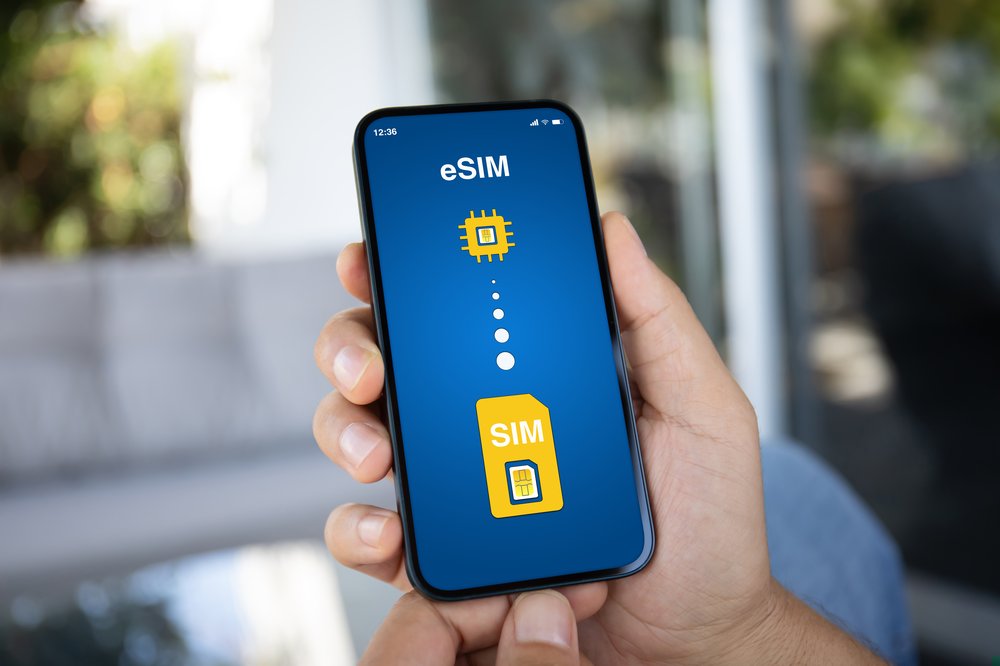
Using a Japanese eSIM lets you land in Japan and immediately access data for all your travel needs—maps, translation, messaging, social media, and your favorite apps—without relying on patchy WiFi hotspots or expensive international roaming. Let’s see how it works and who benefits most from it.
What is an eSIM and How Does it Work?
An eSIM—or embedded SIM—is a digital SIM profile built into your phone, so there’s no physical card to insert. Instead of waiting for a SIM card to be shipped or standing in line to pick one up at the airport, you simply scan a QR code (or download a profile) and activate your plan instantly.
Below is an overview of how eSIMs compare with other connectivity options:
- Pocket WiFi lets you share a router among a group and often offers unlimited data. However, you will have to pick up the device, carry it at all times—without forgetting to charge it—and ultimately return it, which can be inconvenient.
- Physical SIM rentals are still standard, but they require a SIM tray, swapping cards, possibly configuring APN settings, and physical pickup or delivery.
- Free WiFi is tempting, but it is often limited in Japan and usually slow or unsecured, especially outside major tourist zones.
- International roaming is very handy but can be prohibitively expensive for frequent or high-bandwidth users.
Who is an eSIM in Japan Best For?
An eSIM in Japan is ideal for solo travelers, business visitors, or anyone who wants a straightforward, data-first connection without stopping to collect a device. The setup is quick, the activation is digital, and your phone remains the only thing you need to carry. Light users can rely on it for maps, messaging, and translation apps, while those who depend on steady data for video calls, cloud storage, or frequent social updates will find that an eSIM scales comfortably to meet those higher demands.
Ultimately, the flexibility to choose a plan that matches your exact consumption—without adding extra hardware to your bag—makes it one of the most efficient connectivity options available today.
How to Check Whether Your Phone Supports a Japanese eSIM
On iOS (including the iPhone 17 series):
- Open Settings → Cellular.
- Tap “Add eSIM” or “Add eSIM from QR Code”, depending on how your provider delivers the profile.
New iPhone 17 models support dual eSIM, so that you can have two active eSIMs at once.
On Android (Samsung, Google Pixel, etc.):
- Open Settings → SIM Manager (or Network / Internet → SIMs, depending on your device).
- Look for an option labeled “Add eSIM” or “Download SIM”.
Many modern Android flagships support eSIM: for example, recent Galaxy S-series and foldables do, as do Google Pixel models starting with Pixel 3. If your phone shows an EID (Embedded ID) when you dial *#06#, that’s a strong indicator of eSIM support.
How to Choose the Best eSIM for Japan

Selecting the right eSIM plan comes down to understanding your data habits and matching them with a plan that fits both your trip length and your digital routine. Naturally, a thoughtful choice will save you money, but it will also help you avoid mid-trip top-ups and ensure steady access to the tools you rely on throughout your stay, making it an essential part of your travel preparation.
Understanding Your Daily Data Needs (Light, Moderate, Heavy Users)
Knowing how much data you typically use makes choosing the right eSIM far easier. Usually, daily consumption tends to fall into three patterns:
- Light users (around 1–2GB/day): Refers to travelers who mainly rely on email, messaging apps, translation tools, and occasional map checks.
- Moderate users (about 2–5GB/day): In addition to the above, these travelers also scroll through social media, listen to music online, upload photos, or watch videos.
- Heavy users (5GB+/day): In addition to basic messaging and scrolling, these travelers make regular video calls, upload large amounts of media, stream in HD, or work remotely while on the move.
To help you estimate your needs, here is an approximate look at how much data common travel apps tend to use per hour:
- Google Maps: 50–120MB
- Instagram browsing: 150–300MB
- Instagram uploads (photos/videos): 5–20MB per item, depending on quality
- Google Translate (text + camera use): 20–60MB
- TikTok: 300–700MB
- YouTube:
- 480p: 300–500MB
- 720p: 700–900MB
- Digital payments (Suica app, mobile transit cards): Minimal, usually under 10MB per day
Hopefully, you now have a clear sense of your daily consumption habits, making it much simpler to pick a plan that matches your actual usage without paying for more than you need.
Comparison Overview of NINJA WiFi eSIM Plans (with Pricing & Data)
Choosing the right plan also becomes much easier once you can see all available durations and data tiers side by side. Below is a clear outline of the NINJA WiFi eSIM lineup, spanning short getaways to full-month stays.
| Plan Duration | Available eSIM Data Options | Prices |
|---|---|---|
| 5-day plan | 5GB / 10GB / 15GB / 20GB / 30GB | 5GB 3,102 JPY; 10GB 4,499 JPY; 15GB 5,104 JPY; 20GB 5,599 JPY; 30GB 6,501 JPY |
| 7-day plan | 10GB / 20GB / 30GB / 40GB / 50GB | 10GB 4,609 JPY; 20GB 5,654 JPY; 30GB 6,699 JPY; 40GB 7,601 JPY; 50GB 8,503 JPY |
| 10-day plan | 10GB / 20GB / 30GB / 40GB / 50GB | 10GB 4,851 JPY; 20GB 5,951 JPY; 30GB 7,150 JPY; 40GB 8,448 JPY; 50GB 9,350 JPY |
| 15-day plan | 10GB / 20GB / 30GB / 40GB / 50GB | 10GB 5,104 JPY; 20GB 6,204 JPY; 30GB 7,557 JPY; 40GB 9,647 JPY; 50GB 11,550 JPY |
| 21-day plan | 10GB / 20GB / 50GB / 100GB | 10GB 5,357 JPY; 20GB 6,457 JPY; 50GB 12,199 JPY; 100GB 17,402 JPY |
| 31-day plan | 10GB / 20GB / 50GB / 100GB | 10GB 5,599 JPY; 20GB 6,699 JPY; 50GB 13,156 JPY; 100GB 18,403 JPY |
Practical advantage: Even after high-speed data is exhausted, NINJA WiFi continues to provide low-speed access—enough for essential browsing so you’re never fully offline.
Key eSIM Considerations Before You Buy
Choosing a Reliable Provider
A dependable provider is the backbone of a smooth eSIM experience, especially in a country where travelers rely heavily on translation tools and real-time transit information. Looking closely at the network behind the eSIM is often the biggest difference-maker.
Key factors to evaluate:
- Carrier partner: eSIMs powered by Docomo, SoftBank, or au generally offer the broadest national coverage, reaching both major cities and more remote regions (with Docomo and au providing the best overall coverage).
- Connection speed: Plans offering 4G or 5G access provide far better performance for maps, social media uploads, and video-based apps.
- Support availability: Providers with responsive customer service—in English—save travelers from losing hours troubleshooting connectivity, especially when assistance is available every day.
- Clear cancellation or refund policies: Transparent terms help you avoid unexpected charges.
NINJA WiFi partners with Docomo and SoftBank networks for the best coverage; plus, our support team is available to help you every day of the week.
Validity Periods, Activation Timing, and When to Purchase
Every eSIM has its own rules about when service begins, so understanding the fine print protects you from losing days of data before your trip even starts. Here’s what to keep in mind:
- Start date awareness: Typically, eSIMs begin counting down the validity period from the moment they are activated, which means an early installation could unintentionally shorten your plan.
- Installation timing: Most travelers install the eSIM either on the day of departure or immediately upon landing in Japan to avoid premature activation.
- Expiration windows: Certain plans require activation within a fixed number of days after purchase (such as within a month), which matters when buying far in advance; make sure to read your provider's terms of use.
Conclusion
A well-chosen eSIM plan for Japan can smooth out nearly every part of a trip: quick setup, dependable data, all without the need to pick up or carry any additional device. An eSIM’s flexibility allows travelers to match their plan to their real habits, whether that’s a few gigabytes a day or a heavier allowance for video calls and frequent uploads.
Picking an option that reflects how you actually use your phone prevents overpaying and keeps your connection steady throughout your stay. Providers with strong coverage and clear support make staying online much easier, letting you focus on navigating new neighborhoods, communicating with ease, and sharing your travel moments in real time.
Ready to stay connected from the moment you land? Choose an eSIM plan that fits your trip and enjoy Japan with uninterrupted, stress-free data.