




The Real Cost of Pocket WiFi in Japan: Cheapest Options for Travelers

Connection quality influences far more than the ability to check messages. Travelers often rely on map apps to navigate stations, translation tools to order meals or ask for help, and social platforms to share experiences in real time. Since free WiFi is ultimately limited in Japan, a rented device is often the only practical way to stay online consistently.
A secure pocket WiFi unit also removes the uncertainty that comes with borrowing hotel or café networks, which can be crowded, inconsistent, or unsecured. It’s also an affordable alternative to expensive international roaming.
Yet you might still wonder—what is the actual cost of pocket WiFi in Japan? In this article, let’s explore the costs in more detail so you can make well-informed decisions when choosing your WiFi.
The Price of Pocket WiFi in Japan: Basic Fees & Optional Fees Explained
A clear understanding of pocket WiFi costs in Japan should help you avoid unnecessary expenses and choose a plan that matches how you actually use your device. In this section, we take a closer look at how rental fees are structured to reveal what you truly pay for, and which add-ons may be worth considering.
How Daily Fees are Calculated & How Fees Differ by Data Allowance
Daily rates are based on calendar days, not on 24-hour cycles. Picking up a router at 5 p.m. on a Monday and returning it Tuesday morning counts as two full rental days. It’s easy to overlook such a detail, resulting in a slightly higher total than expected.
Additionally, pocket WiFi pricing varies widely depending on the data allowance. A 1GB-per-day plan typically starts around a few hundred yen per day, while mid-range plans—such as 3GB or 5GB per day—generally are around a thousand yen. High-capacity tiers, such as 10GB per day or unlimited plans, can cost a few thousand yen. For example, a traveler renting a 770-yen plan for 7 days would need to pay 5,390 yen.
Considering Optional Fees
Optional services can add value depending on your travel style, but they also significantly influence the final cost. As a reference, NINJA WiFi offers a detailed set of optional add-ons, including items such as:
- Insurance + Battery Plan: 440 yen per day
(Covers device damage or loss while providing a portable battery for more extended daily use.) - Full Insurance Plan: 330 yen per day
(Offers protection against repair fees or replacement costs.) - Medical and WiFi Insurance: 770 yen per day
(Includes insurance for the device as well as a fundamental travel medical component.) - Cellphone for Domestic Phone Calls: 550 yen per day
(Handy for travelers who plan to make local calls for reservations, logistics, or emergencies.)
It’s usually recommended to select an insurance plan to travel more confidently; however, it is ultimately a personal choice. What matters is choosing something that aligns with your itinerary and budget.
How to Calculate Extension or Late Fees
As expected, keeping the device beyond the original return date results in additional daily charges. Many providers apply standard daily rates for extensions, while others may charge premium late fees. NINJA WiFi takes a transparent approach:
- If notified at least one day in advance, extension fees for portable routers are simply the regular daily rate.
- If an extension is made without prior notice, an additional 1,617 yen per day is charged for each extra day.
- For plans exceeding 1,617 yen per day, including unlimited plans, travelers are charged both rental and optional service fees (such as insurance) for any extra days, regardless of whether an extension request was submitted.
Keeping track of your return date is therefore strongly recommended.
Cheapest Pocket WiFi Plans in Japan: Recommended Choices for Every Budget

Finding the cheapest pocket WiFi plan for Japan does not necessarily imply compromising on reliability or ease of use. A careful comparison of plan tiers will help you understand how much data you truly need and where the best value lies for your own trip.
Cheapest Pocket WiFi Plan
A 1GB-per-day plan is the most affordable entry point for . It comfortably supports essential tasks such as browsing train schedules, loading map directions, using translation tools, sending messages, and uploading a handful of photos. Travelers who monitor their usage can stretch 1GB surprisingly far, especially when avoiding high-bandwidth activities like streaming or automatic cloud backups.
Budget-conscious visitors—especially solo travelers or those on short stays—often find the pricing more than sufficient. NINJA WiFi’s SoftBank 1GB plan at 440 yen per day reflects one of the most competitively priced options on the market. The setup is straightforward: turn on the pocket router, connect, and go.
Standard Pocket WiFi Plans
Mid-range plans offer more breathing room for typical travel behavior. A daily allowance of 3GB supports heavy use of navigation apps, regular photo uploads, and casual browsing. Stepping up to 5GB per day accommodates travelers who back up photos during the day, make frequent video calls, or use resource-intensive apps without worrying about hitting a limit.
Most travelers fall into the standard category due to the number of photos and videos taken throughout a trip, and to the time spent on social media, watching videos, or listening to music during long commutes. Small groups and couples who share a device also benefit from these tiers. NINJA WiFi’s lineup includes 3GB and 5GB per-day plans at 770 and 1,100 yen per day, making it easy to match a plan to your expected daily usage without overpaying for extra capacity.
Top-Tier Premium Plans
Unlimited or near-unlimited data becomes indispensable for travelers with demanding connectivity needs. Digital nomads working remotely, families sharing a single router, or visitors who stream video regularly all require a plan that can withstand constant, high-volume use without throttling.
Groups in particular appreciate the predictability of unlimited plans. One daily rate covers everyone, and heavy usage by one traveler does not affect the others. NINJA WiFi’s Infinite Unlimited Plan (SoftBank) offers unlimited high-speed usage starting at 1,980 yen per day, making it a strong choice for travelers who rely heavily on stable, fast connections. For those who want even more speed and who are most likely to stay in the city, NINJA WiFi also offers premium Docomo 5G unlimited options.
Still, keep in mind that when usage exceeds roughly 10GB in a single day or 300GB within a month, the connection may be temporarily slowed to prevent network congestion.
Pocket WiFi Price: Essential Checklist to Avoid Hidden Costs
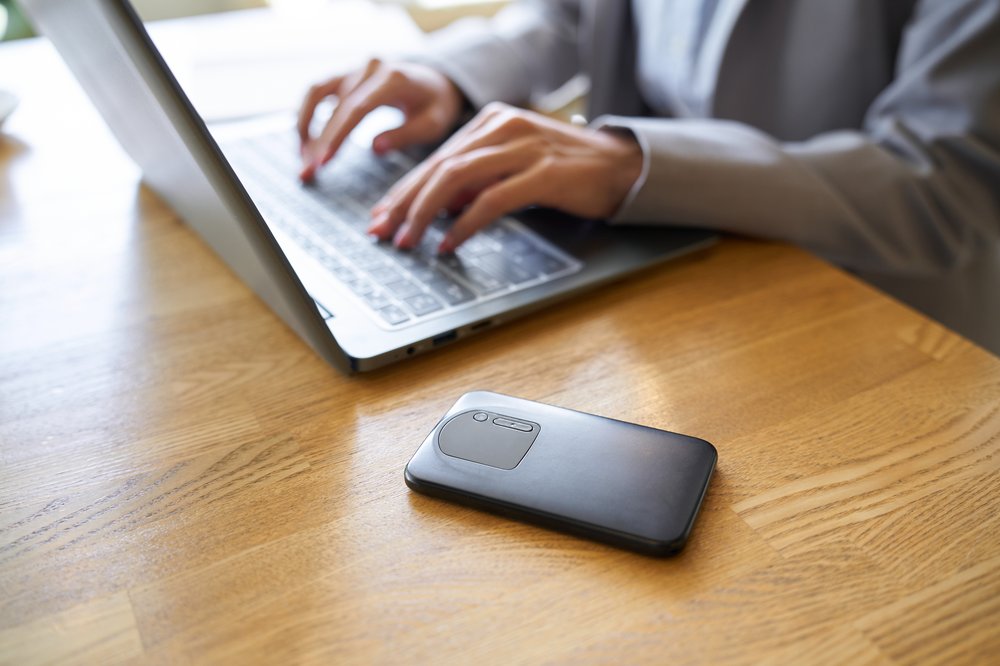
Finally, certain extra charges can quietly inflate the total: understanding what each provider includes makes it far easier to choose the right plan.
Installation, Handling & Administrative Fees
Some providers add small administrative charges that can be easily overlooked when reviewing pricing charts. These fees typically cover device preparation, packaging, or general handling. A few companies also charge for airport pickup or return services, which may not be evident until the final checkout page.
Damage, Loss & Cancellation Fees
Accidental damage or loss is one of the quickest ways for costs to escalate. Pocket WiFi routers are sturdy enough for daily travel, but cracked screens, water exposure, or even misplaced accessories can trigger substantial compensation fees.
Returning the device on time and using a protective case (especially in crowded areas) goes a long way toward avoiding unexpected charges. Many providers outline specific penalties, and being familiar with them also helps set clear expectations. For NINJA WiFi users, the surcharges are transparent and standardized:
Mobile WiFi Router Fee: 40,000 yen- SIM Card Reissue Fee: 3,000 yen
- Spare Battery: 3,000 yen
- Cellphone for Domestic Phone Calls: 20,000 yen
Additionally, in cases of loss or theft, travelers are advised to obtain a certificate from the nearest police station and notify their provider immediately.
Return Method Fees
Return methods vary among providers, and naturally, so do the associated costs. Some travelers prefer the convenience of airport counters, while others rely on drop boxes or courier return services. In NINJA WiFi’s case, the return options are as follows:
Returning the device directly to the airport counter- Using the airport return box
- Returning the device to the Shinjuku Counter in Tokyo
- Sending the device back via delivery (with a 550-yen additional fee)
NINJA WiFi’s flexibility stands out as a significant advantage: coverage across 10 major airports in Japan allows travelers to pick up a router in Hokkaido and return it in Okinawa without any extra effort. Such nationwide accessibility significantly reduces the risk of late returns, especially for multi-city itineraries.
Alternative Options
For travelers who primarily need mobile data on a single phone (rather than multiple devices), SIM cards or eSIMs may be more convenient: they eliminate the need to carry an external router and often cost less for extended stays. NINJA WiFi offers a full range of SIM and eSIM plans with data levels from 5GB to 100GB and durations from 5 to 60 days, allowing you to choose the plan that suits your usage.
Conclusion
As we’ve seen, understanding the real price of pocket WiFi includes evaluating all potential add-on fees, such as optional fees, as well as extension or late fees, administrative fees, loss and damage fees, and return fees. A bit of clarity upfront leads to smoother days on the ground, especially when navigation and trip planning all rely on a stable connection.
Reliable coverage, flexible data tiers, and transparent terms are what truly prove a provider's value. NINJA WiFi stands out for its straightforward pricing, nationwide airport counters, and capped and unlimited plans that suit a wide range of travel styles.
For a trip that stays connected without complications, reserve your NINJA WiFi pocket WiFi device and start your journey confidently.