




Japan Power Outlets & Adapters Explained: A Complete Guide for US Travelers

First-time travelers from the United States often arrive in Japan expecting to deal with adapters and voltage converters, only to find the situation refreshingly simple. Questions like “what plug does Japan use?” and “do I need a power adapter for Japan?” tend to cause unnecessary concern. Japan uses the same Type A plug as the US, meaning standard two-pronged American plugs fit directly into Japanese outlets without any modification.
For most travelers, charging devices is as straightforward as plugging them in upon arrival. Power, however, is more than a technical detail—it underpins nearly every aspect of traveling in Japan. Before you start packing for your trip, it’s a good idea to confirm exactly how power outlets and adapters work in Japan, so you know what to expect when you arrive.
Japan Outlet and Voltage Differences: What US Travelers Should Know
Japan’s electrical system closely resembles that of the United States, yet a few technical distinctions are worth noting. A clear understanding of plug types, voltage, and frequency will avoid unnecessary purchases and ensure your devices operate safely.
Japan’s Power Specs Explained
Japan uses the same Type A plug as the United States, meaning standard two-pronged American plugs fit seamlessly into Japanese outlets. No physical adapter is required for most travelers bringing typical US electronics.
Voltage presents a subtle but important difference. Japan operates at 100 volts, compared to 120 volts in the US. The gap is small, and most modern devices handle it without issue. Still, certain appliances—especially those that generate heat or rely on specific power output—may not perform as intended.
Frequency is another factor to consider: Eastern Japan, including Tokyo, operates at 50 Hz, while Western regions, such as Osaka and Kyoto, use 60 Hz, the same as in the United States. Most electronics are unaffected by the split, though devices with motors or precise timing mechanisms may behave differently depending on the region.
US vs Japan Power Comparison Table
A side-by-side comparison highlights why compatibility is generally straightforward for US travelers:
| Japan | United States | |
| Plug Type | Type A | Type A/B |
| Voltage | 100V | 120V |
| Frequency | 50/60 Hz | 60 Hz |
In practice, the shared plug type and the relatively close voltage levels mean that most US devices function normally in Japan. Built-in power supplies in modern electronics are designed to accommodate a range of voltages, making them resilient to minor differences, such as the 100V standard.
How to Check If Your Device Needs a Voltage Converter
A quick inspection of your device or its charger provides a definitive answer. Look for a label that reads something like: “INPUT: 100–240V ~ 50/60Hz.”
Devices showing a range like the one above are dual-voltage and can operate safely in Japan without a converter. Examples include smartphones, laptops, cameras, and many other travel-friendly electronics.
A label that lists only “120V” indicates a single-voltage device. Extra caution is required in such cases, as using it in Japan may result in reduced performance or damage. Hair dryers, curling irons, and other high-wattage items are the most common examples, and they often benefit from a dedicated voltage converter or a locally purchased alternative.
What US Devices Actually Need a Power Adapter for Japan (and Which Don’t)
Concerns about compatibility, much like worries over Wi-Fi connectivity, might lead travelers to overpack adapters and converters. However, a closer look at common devices shows that most US electronics, including smartphones, laptops, and cameras, work in Japan with little to no adjustment.
Devices That Don’t Need a Japan Plug Adapter
Everyday electronics such as smartphones, laptops, cameras, and USB chargers typically work in Japan without requiring a plug adapter. The shared Type A plug allows direct connection, eliminating the need for additional hardware in most cases.
Nearly all modern devices are designed for dual voltage, usually labeled “INPUT: 100–240V ~ 50/60Hz.” That range covers Japan’s 100-volt system, allowing safe and consistent operation. Checking the charger or power brick—rather than the device itself—provides the most reliable confirmation, as voltage specifications are almost always printed there.
Devices That May Need a Voltage Converter or Alternative Solution
High-power personal care items are more likely to present challenges. Hair dryers, hair straighteners, and curling irons often operate on single voltage (typically 120 volts), making them less compatible with Japan’s 100-volt supply. Electric shavers vary by model, with some supporting dual voltage and others not.
Medical devices such as CPAP machines require particular attention. Many modern units support dual voltage, but it’s essential to confirm specifications in advance. Using single-voltage devices without proper support can result in weaker performance, overheating, or long-term damage.
Practical Solutions for High-Power Devices in Japan
When it comes to personal care items, hotels across Japan commonly provide hair dryers in guest rooms, often eliminating the need to bring one. For longer stays or specific preferences, purchasing or renting compatible devices locally can be more practical than carrying bulky converters—and bringing bulky devices to Japan in the first place.
Outlet Adapter Tips & Charging Strategy in Japan
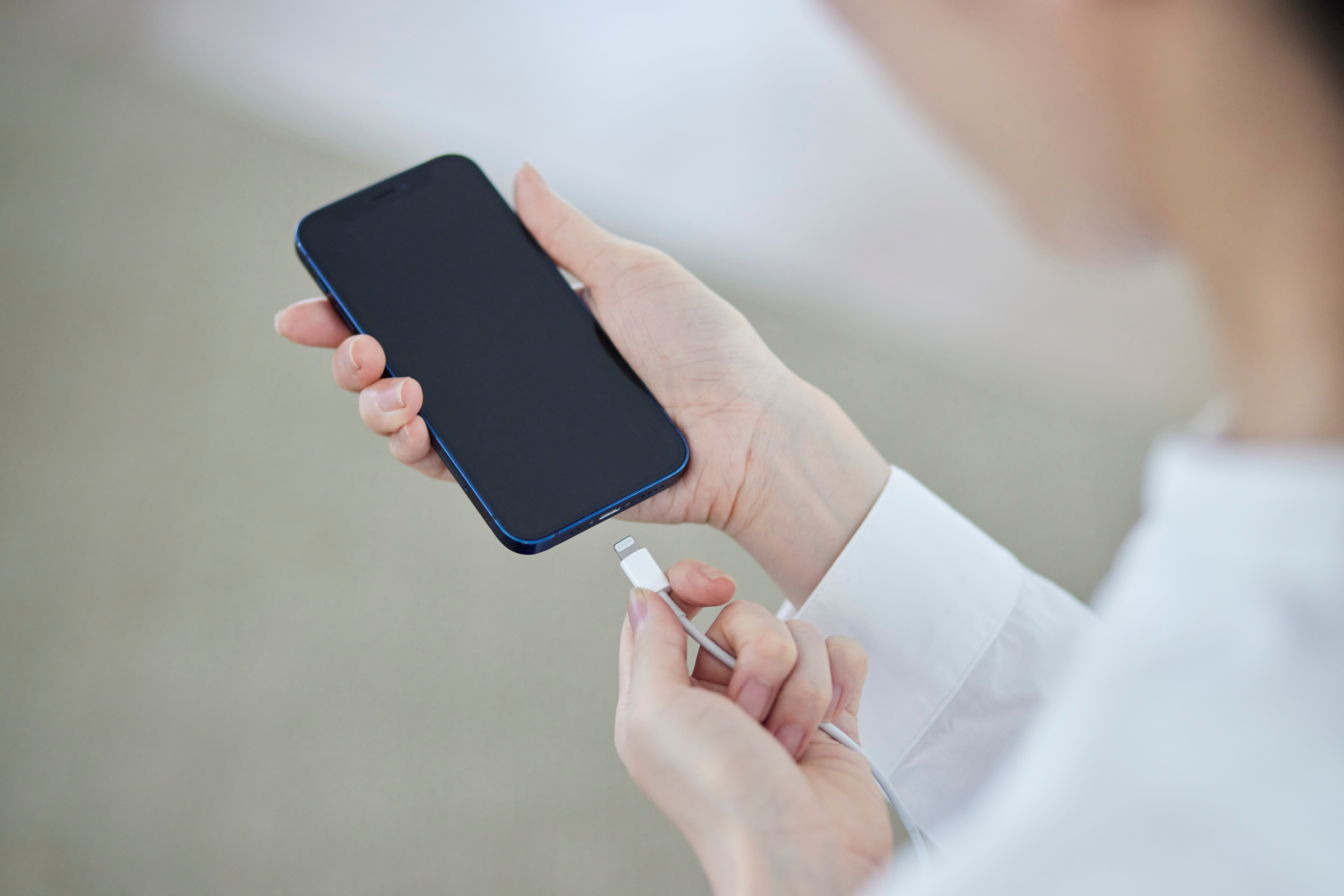
A few practical adjustments are usually sufficient to stay powered in Japan without unnecessary interruptions.
The 3-Prong Plug Issue in Japan
Most outlets in Japan are designed for two-pin plugs, which can be a minor inconvenience for travelers carrying devices with three-prong plugs—common on certain laptop chargers. While the plug will not fit directly, the solution is straightforward.
A simple three-to-two prong adapter resolves the issue instantly and costs very little. These adapters are widely available across Japan, including convenience stores, electronics retailers, and 100-yen shops. Picking one up after arrival is often easier than packing one in advance, especially for short trips.
Mobile Battery Strategy: Keep Your Power (and Travel Plans) Alive
Additionally, portable batteries play a central role in maintaining connectivity throughout the day. A capacity of 10,000-20,000 mAh typically provides one to three full smartphone charges, offering a reliable buffer during long travel days.
Airline regulations require portable batteries to be carried in hand luggage, with most airlines allowing units with less than 100 watt-hours without special approval.
Electronics stores and major discount chains across Japan stock a wide selection of power banks at competitive prices, often priced between 1,500 and 4,000 yen, depending on capacity and brand. Managing power effectively keeps maps accessible, tickets retrievable, and communication uninterrupted—an essential advantage when navigating Japan’s fast-paced transit systems and dense urban environments.
Stay Connected in Japan
A battery-depleted smartphone means no maps, no translation tools, no reservations, and no reliable way to communicate. Since essential services rely heavily on both battery life and a stable data connection, it’s best to plan for how you’ll stay connected in Japan.
eSIM vs SIM Card vs Pocket Wi-Fi: Choosing the Right Option
Several connectivity options are available in Japan, each suited to different travel styles.
eSIM offers the fastest setup, with no physical card required. Activation typically takes only a few minutes, making it an efficient choice for solo travelers or short stays. Compatibility depends on having a relatively recent, unlocked smartphone that supports eSIM functionality.
SIM cards remain a straightforward and often budget-friendly option. Installation is simple, though it requires an unlocked device with a physical SIM slot. Prepaid data plans are widely available at airports and electronics stores, with clear instructions in English.
Pocket Wi-Fi provides a portable hotspot that connects multiple devices at once, making it especially useful for families or small groups. Performance is generally reliable across urban areas and transit routes, so you don’t need to depend on hotel or café networks. Setup is minimal—power on the device, enter the password, and connect. Since pocket Wi-Fi units rely on their own batteries, it’s also essential to include them in your daily charging routine. You might even want to bring or rent a backup power bank to ensure uninterrupted internet access throughout the day.
Stress-Free Connectivity with NINJA WiFi
For travelers seeking a seamless experience, NINJA WiFi offers a well-established solution tailored to international visitors. English-language customer support is available to assist with setup, charging questions, or any connectivity concerns.
Pickup is available at 10 airports across Japan, with clearly marked counters to ensure a smooth start immediately upon arrival. Flexible return options—including airport drop-off in a different city or convenient return by mail—make the service especially practical for multi-city trips across Japan. Hotel delivery is also available, allowing devices or accessories to be sent directly to your accommodation.
Keeping a fully charged backup battery on hand complements any connectivity choice, ensuring continuous access to maps, reservations, and communication tools, no matter how long the day goes on.
FAQ About Japan Power Adapters

Even with a general understanding of Japan’s electrical system, a few practical questions tend to come up before departure. Here are clear answers to help eliminate last-minute uncertainty.
Do I Need a Power Adapter for Japan from the US?
In most cases, no adapter is required. Japan uses the same Type A plug as the United States, so standard two-pronged US plugs fit directly into Japanese outlets. Most travelers can charge their devices immediately without any additional equipment.
Will My US Electronics Work Safely in Japan?
Yes—provided the device supports dual voltage. Electronics labeled “INPUT: 100–240V ~ 50/60Hz” are designed to operate safely in Japan’s 100-volt system.
Devices limited to 120 volts may still function, but performance can be inconsistent. Heat-generating appliances are particularly sensitive, with potential issues ranging from reduced efficiency to overheating or long-term damage.
Can I Use a US 3-Prong Plug in Japan?
Three-prong plugs do not fit into Japan’s standard two-pin outlets. A simple three-to-two-prong adapter quickly resolves the issue and is inexpensive. Such adapters are widely available at convenience stores, electronics shops, and 100-yen stores throughout Japan.
Should I Bring a Voltage Converter to Japan?
A voltage converter is only necessary for single-voltage, high-power appliances such as certain hair dryers or styling tools. For most modern electronics, converters add unnecessary bulk without providing any real benefit. Packing lighter and relying on compatible devices—or locally available alternatives—keeps travel simpler and more efficient.
Conclusion
Preparing for Japan’s electrical system is far less complicated than many travelers expect. Most visitors from the United States will not need a Japan power adapter, since standard two-pronged US plugs fit directly into Japanese outlets and most modern electronics already support dual voltage. A quick check of your charger label is usually all it takes to confirm compatibility.
Successful travel in Japan depends less on carrying extra adapters and more on managing power effectively throughout the day. Keeping devices charged ensures uninterrupted access to navigation, reservations, translation tools, and communication services that quickly become indispensable when moving through busy stations and unfamiliar neighborhoods. Staying charged ultimately means staying connected, and reliable connectivity makes travel across Japan significantly smoother and less stressful.
Booking pocket Wi-Fi in advance adds another layer of convenience, particularly for travelers relying heavily on maps, messaging, or multiple connected devices. Airport pickup options simplify the process immediately upon arrival, while flexible plans and dependable nationwide coverage help maintain a stable connection throughout the trip.