





Japan SIM Card vs. Pocket WiFi: Which Is Best for Your Trip?
While staying connected in Japan is essential for navigating the country, communicating, and remaining informed, travelers often face a crucial decision: Should they opt for a SIM card or rent a pocket WiFi device?
Each option has distinct advantages depending on your travel style, device needs, and budget. In this guide, we’ll break down the differences, weigh the pros and cons, and help you decide on the best fit for your trip.
Japan SIM Card vs. Pocket WiFi: An In-Depth Comparison
This section provides a detailed breakdown to help you choose the best Internet solution for your trip.
How Pocket WiFi and SIM Cards Work in Japan
Pocket WiFi
A pocket WiFi device is a portable router that connects to Japan’s 4G or 5G networks and creates a private WiFi hotspot. It can support multiple devices simultaneously, including smartphones, tablets, and laptops, making it ideal for travelers carrying multiple gadgets or those traveling in a group.
Pocket WiFi provides a stable, high-speed connection without requiring changes to your phone’s SIM card, ensuring compatibility with all devices.
SIM Cards
A SIM card is a compact chip that replaces your existing SIM, allowing your smartphone to connect directly to a Japanese mobile network.
A SIM card eliminates the need for an external device; however, most SIM cards for travelers provide data-only access, which implies that you won’t be able to make calls or send texts using the SIM.
Additionally, they can only be used on one device at a time, making them less practical for those needing multiple connections. Some smartphones may also require unlocking before they can accept a Japanese SIM.
Cost Comparison
Pocket WiFi
- Daily rental costs: Pocket WiFi rental rates vary depending on data limits and rental duration. With NINJA WiFi, prices start at 440 yen for 1GB per day, 770 yen for 3GB, and 1,980 yen for unlimited data with no speed restriction.
SIM Cards
- One-time cost: Rental rates for SIM cards vary depending on data allowance and validity period. With NINJA WiFi, a 7-day plan offering 1GB daily costs 3,795 yen; a 15-day Infinite Unlimited Plan costs 7,150 yen, while a 30-day Infinite Unlimited Plan costs 9,900 yen.
Which Is More Cost-Effective?
- ●For solo travelers: A SIM card may be more affordable, especially for those only interested in basic browsing and navigation.
- ●For groups: Pocket WiFi offers better value since the cost can be split among multiple users while providing unlimited Internet.
- ●For long-term travelers: A local SIM card with a monthly plan might be a more economical choice for extended stays in Japan.
Rental Process: How Easy is it to Get a SIM Card or Pocket WiFi?
Pocket WiFi
- ●Pre-booking online: Reserving a pocket WiFi in advance is recommended, as it ensures availability and can even come with discounts.
- ●Pickup/drop-off: Most providers have pickup/drop-off counters at major airports, allowing seamless pickup upon arrival. NINJA WiFi has counters at 10 different airports across Japan, making it an ideal choice for people exploring lesser-known areas. You can also pick up your device from dedicated counters in town, such as NINJA WiFi’s Shinjuku or Asakusabashi counters in Tokyo.
- ●Hotel delivery: Some services, like NINJA WiFi, offer hotel or accommodation delivery, so you can receive your device where you decide to stay.
- ●Return convenience: Pocket WiFi rentals at multiple locations, including airports, designated counters, and even via mail.
SIM Cards
- ●Buying online before departure: Ordering a SIM card before traveling ensures you have it ready to use upon arrival.
- ●Pickup: Similar to pocket WiFi, you can retrieve your SIM card at airport counters or dedicated shops or even get it delivered to the address of your choice.
- ●Vending machines at airports: Some airports in Japan have vending machines that dispense prepaid SIM cards, offering a quick and easy solution in case you did not pre-book one.
- ●Electronics stores: SIM cards are also available at major electronics retailers such as Bic Camera and Yodobashi Camera, though purchasing on-site may offer limited options.
When to Choose a SIM Card for Your Japan Trip

Best for Solo Travelers and Light Data Users
A SIM card is an excellent option for solo travelers who only need the Internet on their phone. It’s ideal for Google Maps, messaging apps like WhatsApp or LINE, checking emails, and browsing travel guides.
Since it doesn’t require an extra device, it’s perfect for those who prefer to travel light. Plus, there’s no need to return it, so you won’t have to worry about misplacing or damaging a rental. Once your trip is over, you can simply discard it.
Limitations of SIM Cards: What You Should Know
- ●Limited to one device: You cannot connect multiple devices (or at least not without creating a mobile hotspot).
- ●Potential compatibility issues: Some locked phones and certain carriers may not support Japanese SIM cards.
- ●No dual SIM usage: Swapping SIMs implies you won’t receive calls or texts on your regular number, which could be inconvenient for two-factor authentication or urgent messages.
- ●Setup required: Many SIM cards need APN configuration, which can be confusing if you’re unfamiliar with phone settings.
A SIM card is lightweight and straightforward, making it ideal for solo travelers, but if you need multi-device access, easy setup, or your own SIM card, pocket WiFi may be the better choice.
When to Choose Pocket WiFi for Your Japan Trip

Best for Group Travelers and Heavy Data Users
Pocket WiFi is ideal for heavy data users needing multiple device connectivity. Families, friends, and business travelers can share a single device, making it more cost-effective. It’s also an excellent option for video calls, streaming, and remote work, providing a strong, stable connection.
Many plans offer unlimited data, ensuring smooth browsing even with high usage. Plus, if your phone only has one SIM slot and you want to keep your home SIM active, pocket WiFi lets you stay connected without swapping cards.
Downsides of Pocket WiFi: What to Expect
- ●Requires charging: Most devices last 8–12 hours, so that you may need a power bank for long days out.
- ●Needs to be carried: Though small, it’s still one more item to keep track of in your bag.
- ●Must stay together: Since everyone relies on the same connection, group members must always stay within range of the device if they wish to access the Internet.
Despite these minor inconveniences, Pocket WiFi offers unmatched flexibility, reliability, and ease of use, making it a top choice for travelers who need fast, consistent Internet anywhere in Japan.
Other Connectivity Options in Japan: Free WiFi, Roaming, and 2026 Trends
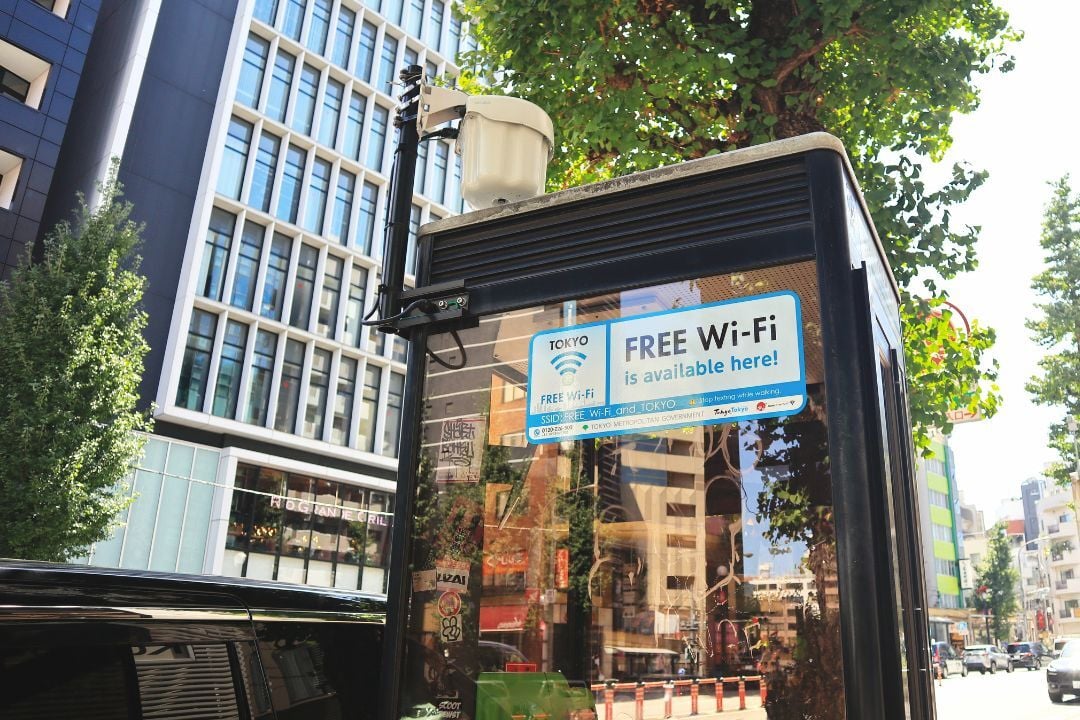
While pocket WiFi and SIM cards are the most reliable options, some travelers may consider alternatives like free public WiFi or international roaming. These options may seem convenient at first glance, but they come with trade-offs in speed, reliability, and cost. Here’s what you need to know and upcoming trends in Japan’s Internet landscape.
Free WiFi and International Roaming: Are They Reliable?
Japan offers free WiFi in airports, cafes, and train stations, but connections can be slow, require frequent logins, and pose security risks. Public WiFi also isn’t always available when you need it most, such as on trains or in remote areas.
International roaming allows travelers to use their home carrier’s network in Japan, but costs add up quickly. Various US carriers offer travel passes at around 10 dollars per day, which is already more expensive than basic pocket WiFi plans.
Without a travel pass, using roaming can be as costly as 2 dollars per MB, implying that simply checking Google Maps could cost you several dollars—assuming that your mobile carrier supports international roaming.
2026 Trends: What’s Changing for Travelers?
Japan’s mobile internet landscape is evolving, bringing new opportunities for travelers to stay connected with better speed, coverage, and flexibility.
5G Expansion Across Japan
Japan is rapidly rolling out 5G networks, offering ultra-fast speeds and lower latency. Major cities like Tokyo and Osaka already have widespread 5G coverage, but more rural areas are gradually being included. For travelers, this translates to:
- ●Faster internet speeds for both pocket WiFi and SIM card users.
- ●Improved streaming, video calling, and real-time navigation.
- ●A better online experience in crowded areas, as 5G can handle more simultaneous connections.
However, 5G coverage still varies by location, so travelers should check whether their device supports 5G and whether their rental SIM or pocket WiFi offers it.
The Growth of eSIM Technology
eSIMs (embedded SIMs) are gaining popularity as a convenient digital alternative to physical SIM cards. Instead of inserting a SIM card, users simply download an eSIM profile to their smartphone. This allows for:
- ●Instant activation: no need to visit a store or wait for delivery.
- ●Dual SIM functionality: Travelers can keep their home SIM while using a Japanese data plan.
- ●Flexible plans: eSIMs can be activated for a few days or an entire month, depending on your needs.
However, not all phones support eSIMs, and some carriers in Japan still have limited compatibility. Before relying on the eSIM option, travelers should check if their device and network provider support eSIMs.
Next-Generation Pocket WiFi Devices
Pocket WiFi technology is also advancing, making it an even more convenient option for travelers. The latest models offer:
- ●Longer battery life, lasting 20+ hours on a single charge.
- ●Stronger connectivity, supporting 5G networks for faster speeds.
- ●Smaller and lighter designs make them easier to carry around.
As these devices improve, pocket WiFi remains an excellent option for those who need reliable, unlimited data in Japan.
Conclusion
Staying connected in Japan is essential for navigating, communicating, and making the most of your trip. Whether you choose a SIM card for its convenience and simplicity or pocket WiFi for its shared connectivity and unlimited data, the right option depends on your travel style.
Solo travelers and light data users may prefer a SIM card, while groups, remote workers, and heavy streamers will benefit more from pocket WiFi.
For a stress-free experience, NINJA WiFi offers reliable pocket WiFi rentals with easy airport pickup, flexible return options, and unlimited data plans—perfect for ensuring seamless connectivity throughout your journey.
Book in advance to secure the best rates and enjoy worry-free internet access in Japan!